Your response changes
Muscles can become less responsive to small protein servings. A useful amount at each meal matters.

Your practical guide to getting enough protein through midlife without counting every gram or rebuilding your diet.
A practical educational estimate, not a prescription. Needs can differ with illness, recovery, appetite or kidney disease. Speak with your doctor or dietitian if you have a medical condition.
Muscles can become less responsive to small protein servings. A useful amount at each meal matters.
Protein provides the building blocks; resistance exercise gives your body a reason to use them.
Alongside calcium, vitamin D and movement, protein contributes to the framework of bone.
A protein anchor can make meals more satisfying and support steady energy between them.
Add fruit or pandesal to complete the meal.
Cooked chicken, rice and vegetables.
Cold water, or blended with coffee and ice.
Fish, ensalada, vegetables and rice.
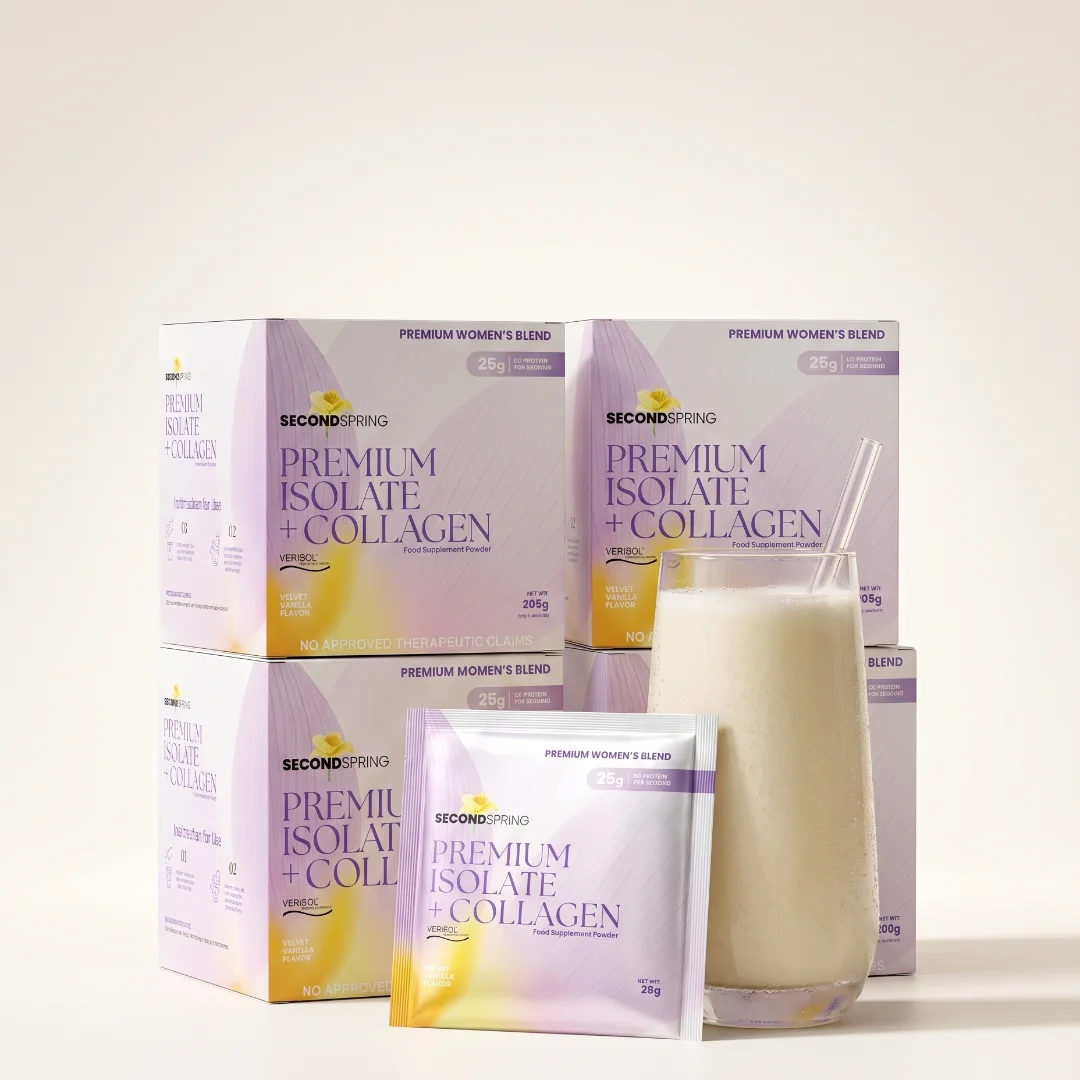
SECONDSPRING® Premium Women’s Blend is not your whole diet. It is the dependable protein moment that makes the rest of your day easier.
Visit SECONDSPRING® ↗
PDRI means Philippine Dietary Reference Intakes. It gives reference values for planning and assessing the diets of healthy Filipinos. Its Recommended Nutrient Intake, or RNI, is a population benchmark, not a personalised prescription.
A gentle food-first starting point for regular movement. It is a practical calculator level, not the PDRI RNI translated to every body weight.
Our practical default. It is close to the PDRI RNI when expressed against its reference weight and can help spread useful servings across the day.
A higher practical target for women doing consistent resistance training. More protein alone does not build more muscle. Training provides the stimulus.
How to use this: treat the calculator result as a starting range, then adjust for appetite, training, health and professional advice. Pregnancy, breastfeeding, kidney disease, illness or recovery need individual guidance.
Source: FNRI-DOST Philippine Dietary Reference Intakes 2015, revised 2018